

Define the information journey
A project may purchase a capable document platform and still operate through email attachments, local copies, and informal approvals. The gap is usually a missing information process. Before configuring folders, map how a model or drawing moves from authoring through team review, shared coordination, formal authorization, and archive.
For each transition, identify the sender, checker, approver, required metadata, and trigger. This map should describe real work the team can perform. A workflow that exists only in a procedure manual will be bypassed as soon as deadlines tighten.
Distinguish work from reliance
A hypothetical structural package may be suitable for internal coordination while still being unsuitable for construction. Status labels need to communicate this distinction clearly. Define what each state means and what recipients may rely on it for.
An engineer should be able to tell whether a model is a working reference, a shared coordination input, or an authorized deliverable. Avoid vague states such as 'final' when a later formal review remains. The platform can enforce transitions, but project leadership must establish the rules and consequences.
Make metadata answer real questions
Metadata is useful when it helps recipients find, interpret, and trust a container. A naming convention, revision, suitability or status code, originator, discipline, and zone may all matter, but only if their meaning is agreed and their values are maintained.
Start from frequent queries: which model covers this grid range, which revision was used for the last review, and who owns the next update? Then select the smallest metadata set that answers them. Excess fields become decoration when users can leave them blank or populate them inconsistently.
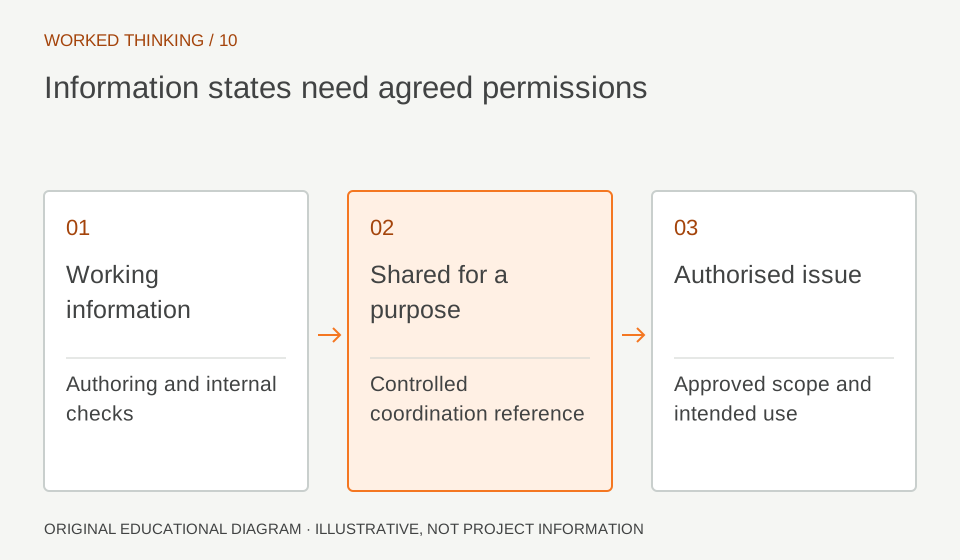
Read diagram notes
- Working information
- Authoring and internal checks
- Shared for a purpose
- Controlled coordination reference
- Authorised issue
- Approved scope and intended use
Assign permissions by responsibility
Access control should match the work. Authors need to update their working information; reviewers need to comment or approve within a defined scope; recipients may need read-only access to issued packages. A single broad project group with edit access weakens the audit trail and makes accidental changes difficult to diagnose.
For a sample concrete frame package, a discipline lead might authorize an issue while a field team can read the approved revision. Test permissions with representative accounts, including people who cross company boundaries.
Treat a state change as a decision
Moving an information container from one state to another should capture a meaningful event. That event may include a completed check, an approval, a response to comments, or a formal issue. Record the actor, date, revision, and outcome.
If teams move files by drag-and-drop without reviewing the required evidence, the platform's status history becomes a misleading story. Keep the approval action aligned with the project's contractual authority and technical review procedure; a software button cannot grant engineering competence or legal authority.
Preserve revisions and links
A reliable environment helps users identify what changed and which downstream decisions used an earlier revision. Keep superseded information discoverable but prevent it from being mistaken for current. Coordination reports, issue records, calculations, and drawings should reference the exact model revision or package identifier they relate to.
If a new revision silently overwrites the old file, a reviewer may be unable to reconstruct an earlier decision. Agree retention and archive rules before the first delivery, then verify that the system actually supports them.
Pilot the workflow with one exchange
Do not configure every project workflow at once. Pilot a representative exchange: a structural model submitted for coordination, reviewed, returned with comments, resubmitted, and authorized for a defined use. Ask users to complete the process using ordinary permissions and realistic time constraints.
Note where they rely on email, cannot find the latest revision, or misunderstand a status. These are process design findings, not merely training gaps. Adjust the workflow and repeat the pilot before expanding it to more disciplines.
Measure reliability, not activity
A large number of uploads does not show that the CDE works. Useful measures include the share of packages with complete metadata, time between submission and review, rate of outdated references, and number of decisions made using an unapproved revision.
Interpret metrics with context: a slow review may reflect a complex package rather than poor behavior. In a hypothetical project, a simple weekly stale-reference report could prevent field teams from using an older structural issue. The goal is predictable information flow that supports accountable engineering decisions.