

Extend the use with a question
A model has no lifecycle value merely because it is carried into a new phase. Define the operational or construction decision first. A contractor may ask whether a completed pier matches the issued geometry; a planner may ask which work fronts can proceed next week; an owner may need maintainable component identifiers.
Each question needs different evidence and information. State the model revision, responsible source, and acceptance threshold for the decision. This avoids the assumption that one design model is automatically fit for every later purpose.
Compare design with observed condition
For a hypothetical bridge, a point cloud or survey surface can be compared with the design model to investigate pier position, deck geometry, or earthwork progress. The comparison requires a shared coordinate basis, reliable survey control, capture date, and stated tolerance. A colored deviation map is a screening visualization, not a complete survey report.
Confirm significant discrepancies with the surveyor and project specification. Distinguish the measured deviation from any conclusion about structural capacity or contractual acceptance.
Link time with model objects
A 4D view links elements or zones to schedule activities. The model may help a team understand where work occurs and what occupies space at a given time. To make that link meaningful, define selection rules that map model objects to work packages and keep them stable across revisions.
If element identifiers change or scope is restructured, document how links are maintained. A visually smooth animation does not prove the schedule is logically sound, resourced, or achievable.
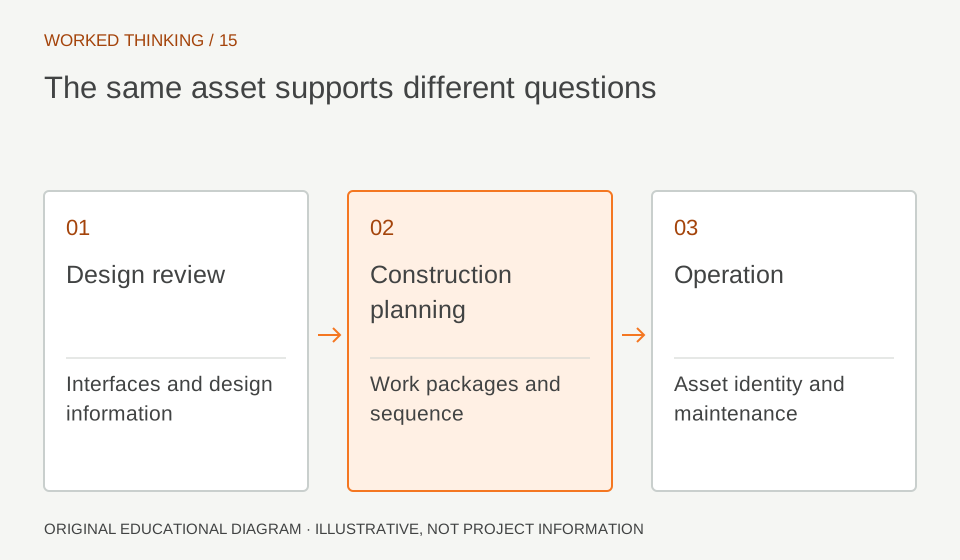
Read diagram notes
- Design review
- Interfaces and design information
- Construction planning
- Work packages and sequence
- Operation
- Asset identity and maintenance
Model construction sequence at useful scale
A schedule may contain thousands of activities while a model contains millions of objects. The connection needs a practical level of aggregation. For a hypothetical interchange, group objects by work front, traffic stage, or construction package rather than creating an animation for every bolt. Include temporary works and access zones when they affect sequence.
Ask construction supervisors whether the visual depicts the actual method and handoffs. The right detail is the smallest level that exposes a real planning decision.
Use quantities with provenance
IFC quantities can support progress or cost analysis if the measurement definition is consistent. Define whether quantities represent design intent, installed amount, inspected amount, or paid quantity. Reconcile model classifications and units against the cost breakdown structure. A 25 percent visual completion estimate may not equal 25 percent payment entitlement.
Preserve the measurement date, model revision, calculation rule, and approving role so downstream reports can be reproduced.
Manage updates without losing history
As design and construction change, the team needs to distinguish current geometry from the record used for earlier decisions. Keep dated model snapshots or controlled revisions and link progress evidence to the relevant baseline. If a pier shifts after survey, the change should create a traceable update rather than overwrite the earlier state.
This history supports investigation and learning. It does not itself determine whether a change is acceptable under contract or whether the as-built record is complete.
Prepare asset data deliberately
A handover model should carry the data the owner expects to use, not every property accumulated during design. Identify asset classes, identifiers, location structure, maintenance fields, and source of truth. Test that values can be exported and consumed by the owner's systems. Verify a sample against equipment tags and commissioning records.
An attractive model with inconsistent identifiers can create more work for maintainers than a simpler, validated asset register.
Keep responsibility visible
Every lifecycle use needs a named owner for model content, source evidence, and acceptance. A designer authors design intent; a contractor records execution evidence; a surveyor controls measurement; an owner decides what asset information is operationally useful. These roles can collaborate, but their evidence should not be conflated. Define handover criteria and unresolved limitations.
IFC is a container and exchange mechanism; reliable lifecycle decisions still depend on governed source data and competent review. For any captured deviation, agree whether it triggers a design review, a corrective work request, or a record update. These outcomes have different authorities and should not be collapsed into a single color status.
Keep the measurement file, comparison settings, and reviewer response linked to the resulting record. This lets a later team understand what was observed and why the project accepted or corrected it.