

The handoff is a working stage
A design package can be complete for its author and still not be ready for a crew. The transition to construction needs a deliberate period to inspect buildability, resolve interfaces, confirm information, and prepare logistics. A model can support this discussion by showing the affected area and connecting elements to work packages.
The gate is not a promise that no change will occur; it is a controlled baseline that makes later changes visible and reviewable.
Organize by work area and start date
For a hypothetical hospital floor, divide the work into control areas with known boundaries and construction start dates. Begin readiness reviews according to the lead time needed for the trades, not on one global project date. Some areas may include piping and ceilings; others may not.
Invite only the disciplines whose scope or access is affected, while preserving visibility of shared interfaces. The model breakdown should make the area boundary unambiguous across drawings, schedule, logistics plan, and issue register.
Confirm what information is being accepted
At the gate, identify the exact model and document revisions under review, their status, and the uses they support. Check whether required geometry, dimensions, specifications, openings, and access zones are present. Ask the contractor and field team whether the package is sufficient to plan the work.
If critical detail is missing, assign an owner and a deadline before releasing the area. A model that is visually complete may still lack installation information or approvals.
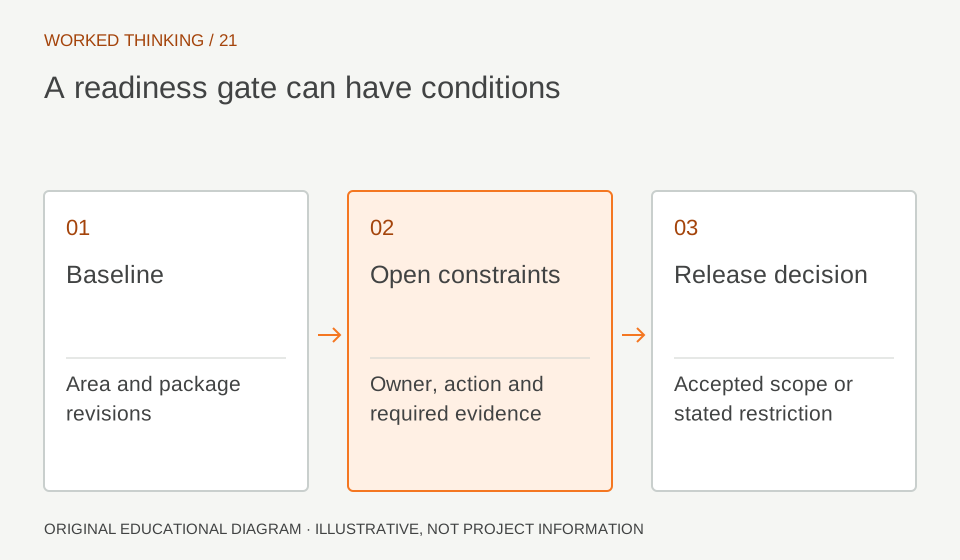
Read diagram notes
- Baseline
- Area and package revisions
- Open constraints
- Owner, action and required evidence
- Release decision
- Accepted scope or stated restriction
Review buildability with the people doing the work
Designers can miss access constraints that become obvious to installers, surveyors, and logistics planners. Use model views to examine lifting paths, laydown, temporary protection, installation sequence, and maintenance access. For a hypothetical transfer beam, the issue may be whether a duct can be installed before ceiling closure, not merely whether it intersects the beam.
The contractor's proposed method should be discussed with the responsible designer when it changes structural loading or permanent design assumptions.
Freeze with a stated scope
A freeze should identify what is stable, what remains open, and how changes will be managed. Define the area, included packages, baseline revision, and effective date. Record any accepted deviations or outstanding conditions. After the freeze, changes should be assessed for impact on procurement, schedule, adjacent work, and safety.
This prevents informal late edits from silently invalidating field plans while allowing necessary changes through a visible control process.
Link the schedule to realistic work
A readiness discussion should include the contractor's sequence, work durations, dependencies, and resource assumptions. Connect model elements to activities only where it clarifies the plan. Ask whether materials, labor, access, inspection, and information are available at the planned start. If an activity depends on an unresolved design response, make that dependency explicit.
The visual sequence helps expose conflicts but does not prove that resources or productivity assumptions are realistic.
Close comments with evidence
Comments from owner, designer, contractor, and trade teams need ownership and a clear response path. Distinguish design changes, construction method decisions, missing information, and accepted conditions. Before declaring readiness, verify that critical comments are addressed in the correct source model or document and that affected participants received the update.
A closed issue register without corresponding controlled information is not proof that crews have the latest instruction.
Learn across repeated gates
Review which issues recur across areas: late openings, missing access zones, survey uncertainty, or unrealistic activity links. Update templates, design deliverables, or trade engagement timing to address the pattern. Track readiness by area rather than reporting one project-wide percentage that hides local blockers.
A strong gate creates a reliable handoff and early warning about unresolved work. It supports model-based execution while keeping each discipline's technical and contractual responsibilities clear. The readiness meeting should end with a concise decision record: area and baseline, accepted scope, outstanding actions, responsible person, due date, and any restriction on release.
Distribute that outcome through the controlled information process so site teams can find it later. If the gate is not passed, record what evidence is missing and when the review will resume. A visible conditional outcome is safer and more useful than an ambiguous verbal agreement.
The decision record should also identify which adjacent work areas may be affected by a change after release.