

Choose the smallest representative package
Use a sample that contains the real project’s difficult relationships: a structural bay, one linked services model, an issue, and an issued PDF or IFC. A blank demonstration model only proves that a demonstration works.
Test people before tools
Have the intended author, coordinator, reviewer and recipient perform their actual tasks with their real access levels. A shared administrator login masks permissions and notification failures.
Exercise the folder states
Create WIP, Shared and Published locations or their agreed equivalents. Put one deliberate incorrect upload in the wrong state and confirm that the team sees the correct response rather than simply moving files informally.
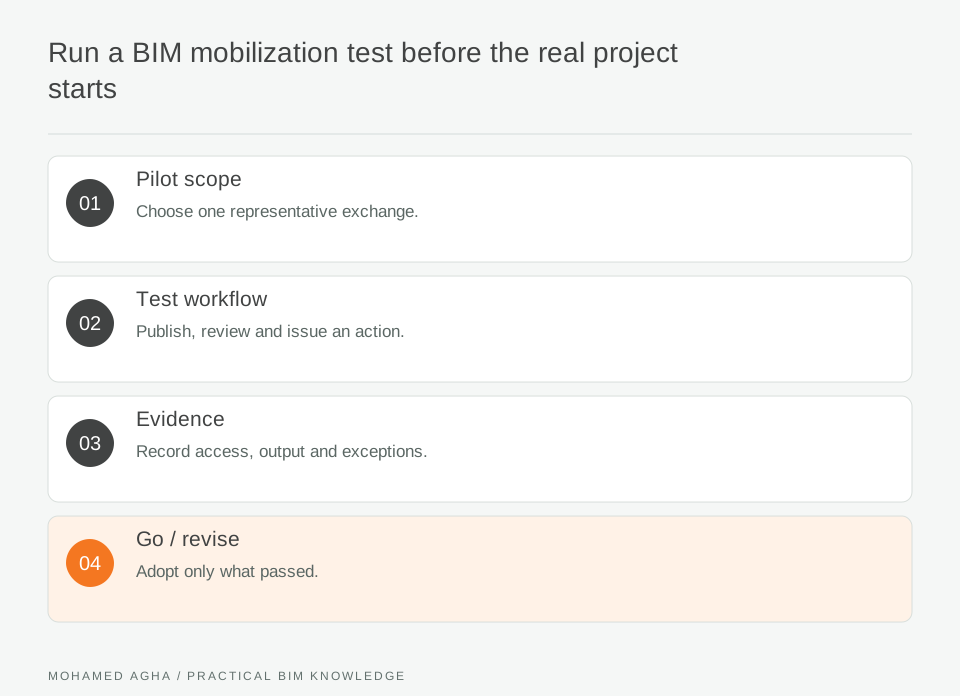
Read diagram notes
- Pilot scope
- Choose one representative exchange.
- Test workflow
- Publish, review and issue an action.
- Evidence
- Record access, output and exceptions.
- Go / revise
- Adopt only what passed.
Prove a controlled exchange
Publish a named sample revision, open it in the recipient workflow, create one issue, assign it, update the model and verify closure against the later named revision.
Capture setup gaps
Record missing templates, unsupported formats, unclear naming, access exceptions and training needs. Classify each as a setup action, decision or risk; do not call the test complete because the visual model opened.
Set the mobilization gate
Use the results to agree which workflows are ready, which require a second test and who owns the outstanding setup. The output is a signed readiness record, not a promise that future project content is error-free.
Worked example: a two-day mobilization rehearsal
A team uses one basement structural bay, a mechanical branch and a PDF issue sheet. The structural author publishes a named test revision to the agreed Shared location. The coordinator confirms that the mechanical reviewer can open it, creates one penetration issue, and asks the author to update a test opening. The recipient then confirms the changed opening in the later named revision. The rehearsal exposes that the reviewer had view-only access to the issue folder, so access is corrected before live work begins. Inputs include a real naming convention, one IFC export setting and the actual review matrix. The first export opens but omits the property required by the recipient. The team traces this to a parameter mapping, corrects it in the authoring template and repeats the recipient-side test. The output is a mobilization log showing the successful exchange, unresolved access action and approved mapping.
Mobilization checklist
Name the pilot package and each role; test folder permissions in the actual accounts; prove one publish–review–issue–update loop; record formats the recipient can open; keep a short list of unresolved setup actions with owners.