
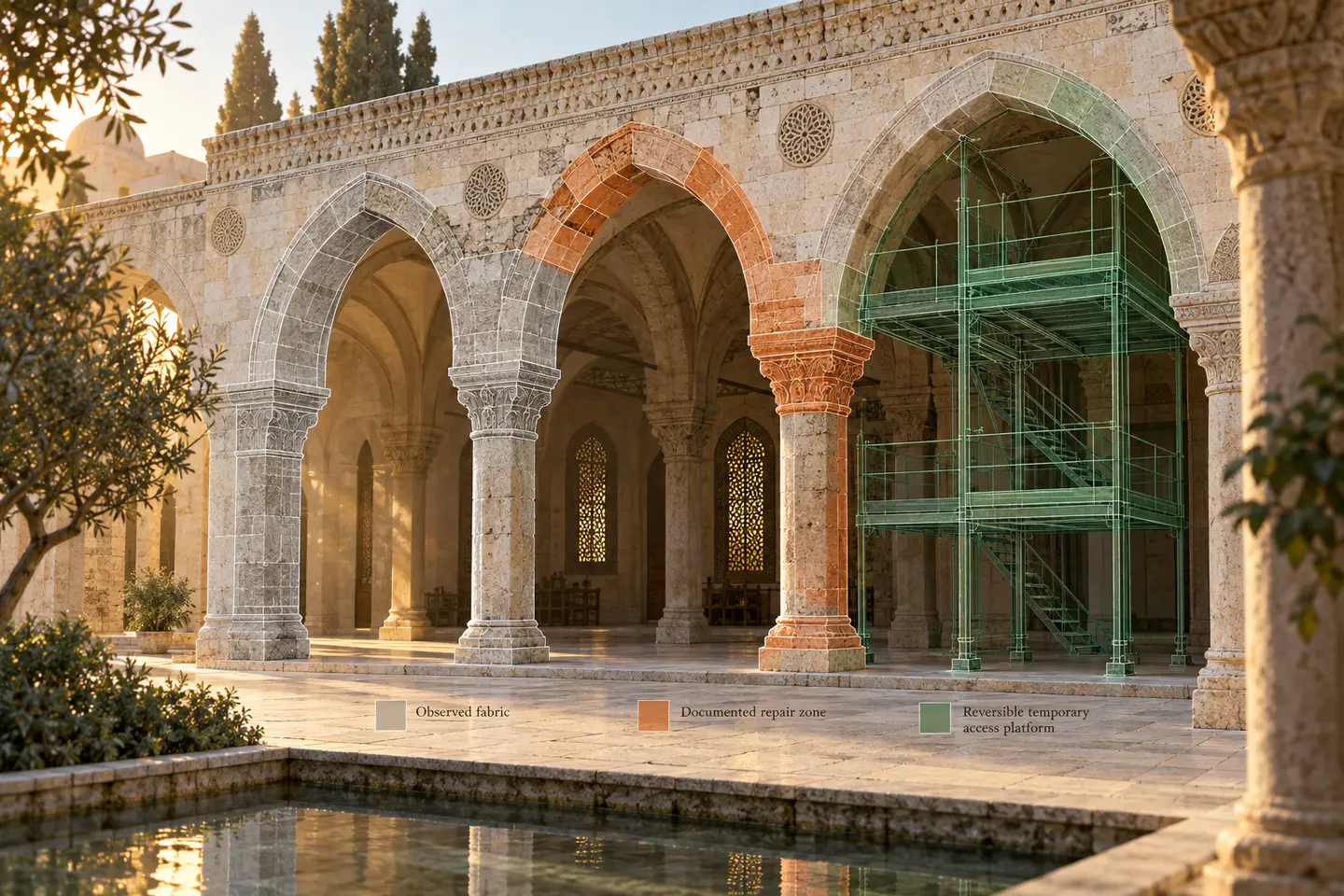
Separate states in the data
Use distinct status values for observed existing fabric, interpretation, proposed intervention, temporary works and post-work verification. The same shape should never carry all states at once.
Keep evidence attached
For each phasing claim, link survey record, photograph, drawing or specialist note. This lets a conservation team distinguish measured fact from a reasoned reconstruction or future proposal.
Model proposals as proposals
Give intervention objects their own date, author, approval status and reversibility note where relevant. Do not merge them into the existing fabric view, where they can be mistaken for historic material.
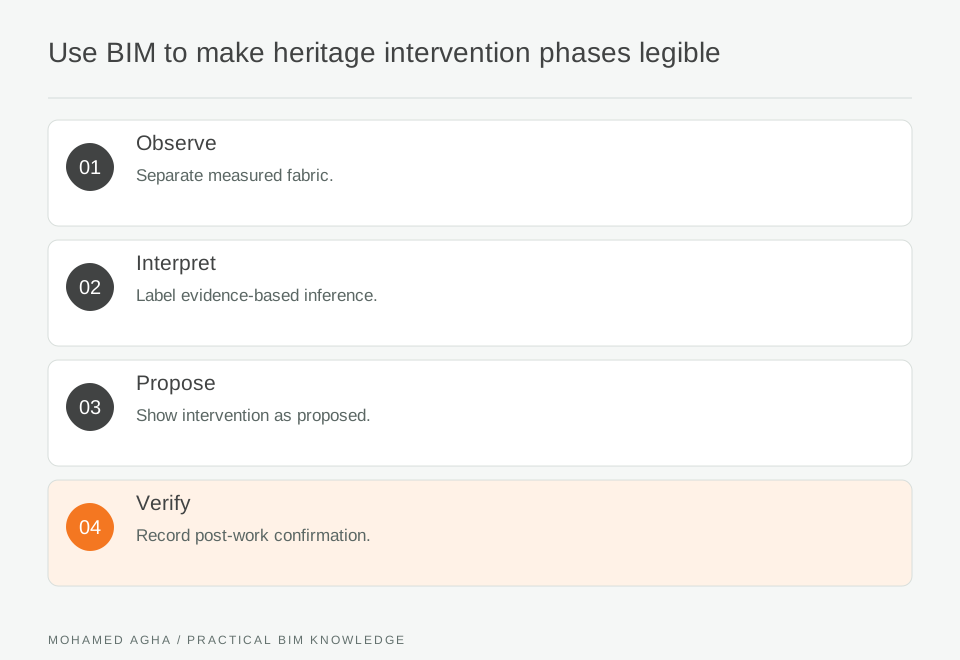
Read diagram notes
- Observe
- Separate measured fabric.
- Interpret
- Label evidence-based inference.
- Propose
- Show intervention as proposed.
- Verify
- Record post-work confirmation.
Review sequence spatially
A phased view can reveal access conflicts, temporary protection needs and interfaces between retained fabric and new work. Use it to prepare discussion, not to claim approval of method or conservation treatment.
Protect uncertainty
If an area was inaccessible or an earlier phase is speculative, represent the uncertainty visibly. Omitting it creates an overconfident record that later teams will struggle to correct.
Verify after work
Following approved work, record what was actually observed or changed and retain the original proposal. A heritage information model gains value when it preserves the difference between intent and evidence.
Worked example: arcade stone repair sequence
A conservation team models an arcade with separate existing, observed-repair and proposed-intervention statuses. A cracked stone block is linked to a survey photo and specialist note, while the proposed temporary access platform is shown in a distinct phase. In the review, the team notices that the platform overlaps an area needing protective screening, so the proposal is revised before approval. After work, the completed repair is recorded as verified evidence and remains distinguishable from the original proposed repair object. Inputs are the measured survey, conservator note, proposed repair drawing and a phased model view. The mismatch is that a proposed access platform blocks a previously unrecorded drainage path. The team adjusts the temporary-work proposal while preserving the observed fabric as unchanged evidence. The output is a revised phased view, evidence links and a clear distinction between approved intervention and existing material.
Phasing checklist
Separate observation from interpretation; give proposed work an approval status; link evidence; show temporary works independently; preserve uncertainty; record post-work verification without overwriting the proposal.