
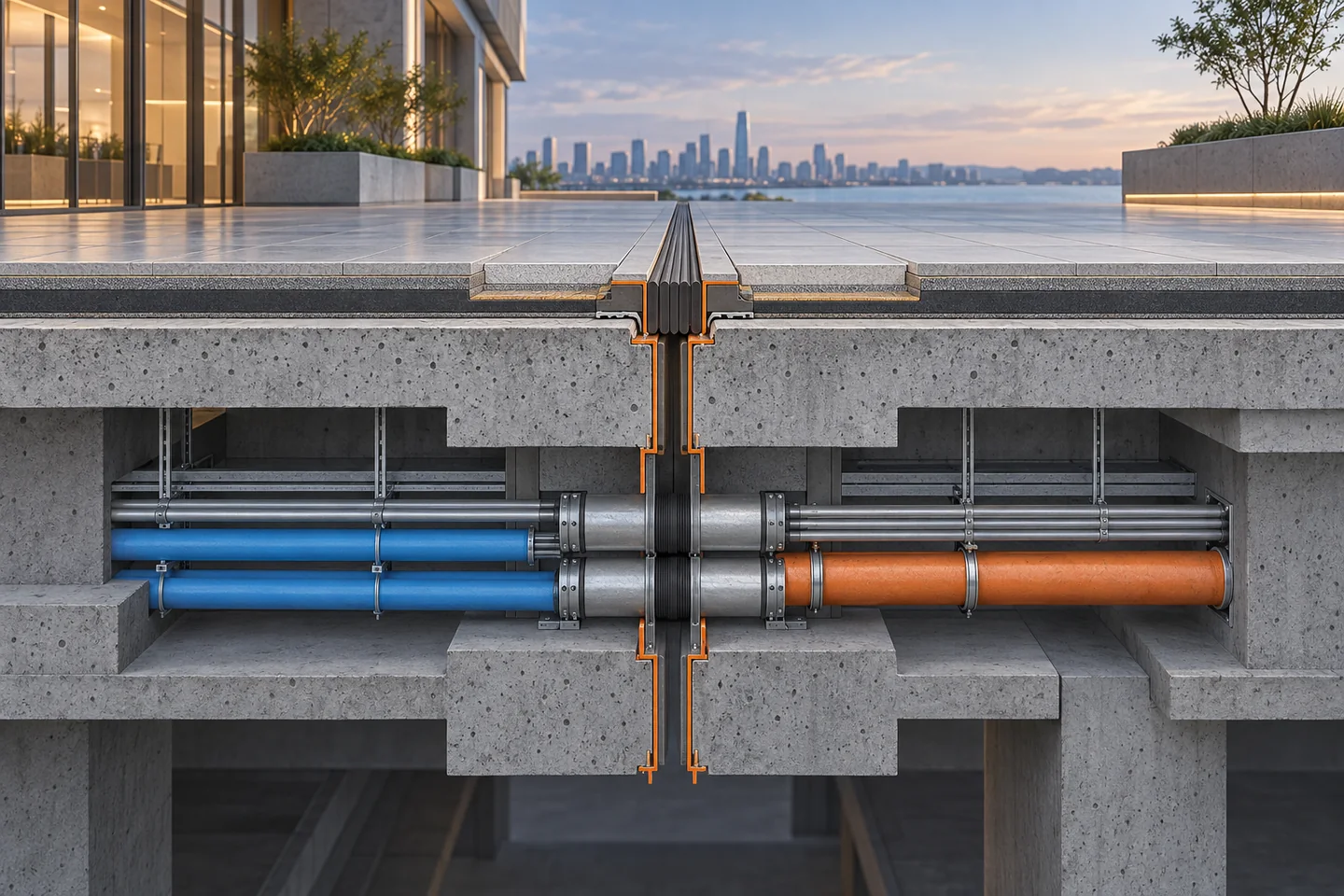
Locate the intentional break
A movement joint is a deliberate discontinuity, so the model must not visually smooth it away. In a mixed-use podium, set the joint against grids, levels and structural zones, then show each side as separate structural objects. The joint line is not merely an architectural hatch; it defines where continuity assumptions stop.
Separate system responsibilities
Structural separation, waterproofing, finishes, façade seals and MEP crossings have different owners and details. Model them as coordinated interface objects rather than one generic gap. This lets a reviewer see where a slab ends, where a membrane crosses, and where a service needs a purpose-designed crossing—without assuming one discipline has approved another’s detail.
Trace service crossings
At each pipe, duct, cable tray or fire-stopping location, capture the service identifier, level and associated detail reference. Review the route in section as well as plan; a tidy plan symbol can conceal a slope, support or access conflict. The coordination output should ask for the governing detail where it is absent, not invent a movement allowance.
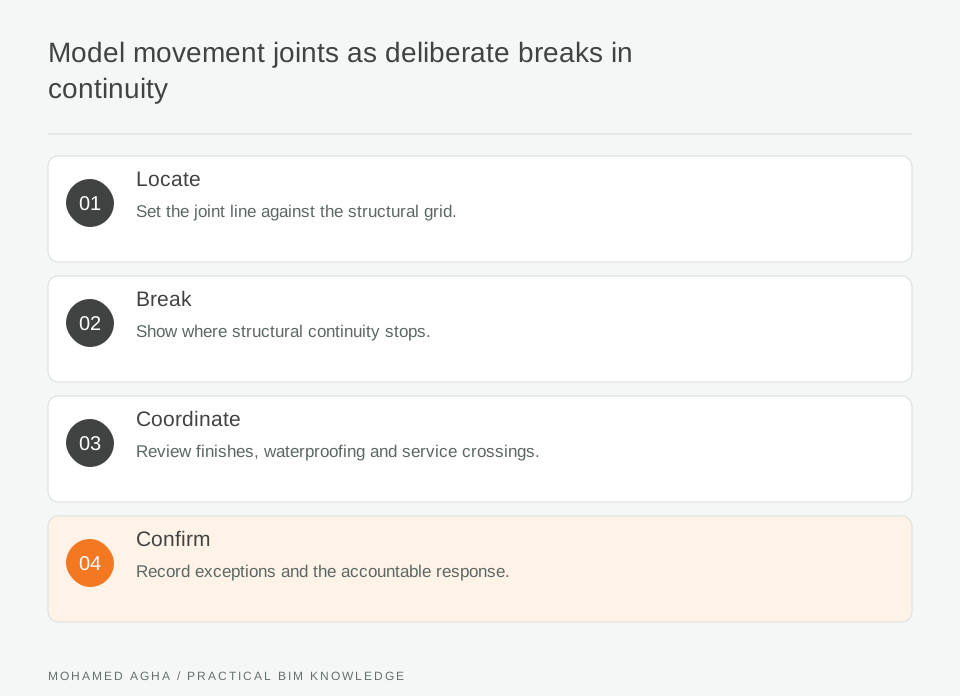
Read diagram notes
- Locate
- Set the joint line against the structural grid.
- Break
- Show where structural continuity stops.
- Coordinate
- Review finishes, waterproofing and service crossings.
- Confirm
- Record exceptions and the accountable response.
Use sections for continuity
A narrow 3D crop can orient the team, but a perpendicular section should be the primary review view. It reveals slab edge, upstand, finishes, waterproofing, insulation and service path at once. Build a small view set for typical and edge conditions instead of claiming one joint family covers every facade, roof and basement condition.
Manage exceptions visibly
Some services may need a controlled bypass or special support near a joint. Give that exception its own issue rather than deleting the joint from a coordination view to remove a clash. Record the responsible roles, decision source and remaining construction question. This protects the logic of the standard joint while making the exceptional condition reviewable.
Publish the governing route
Close the coordination review only when the model points to the current controlled detail and the open actions are assigned. A coordinated view cannot verify joint performance, water tightness, acoustic behaviour, movement magnitude or installation quality. Those matters remain with the responsible design, specification and construction processes.