

Write the requirement as a use
Say who will use the information and for what decision. “Add asset data” is too vague; “allow the facilities reviewer to identify maintainable pumps and their approved documents” can be checked.
Describe the affected population
Name asset classes, zones, model versions, property names, allowed values and source systems. A change can fail simply because authors apply a new field to every object instead of the intended class.
Assess existing information
Check whether the requested value exists in an approved source, whether it needs mapping or manual authoring, and whether the proposed update affects issued schedules, IFC exports or downstream dashboards.
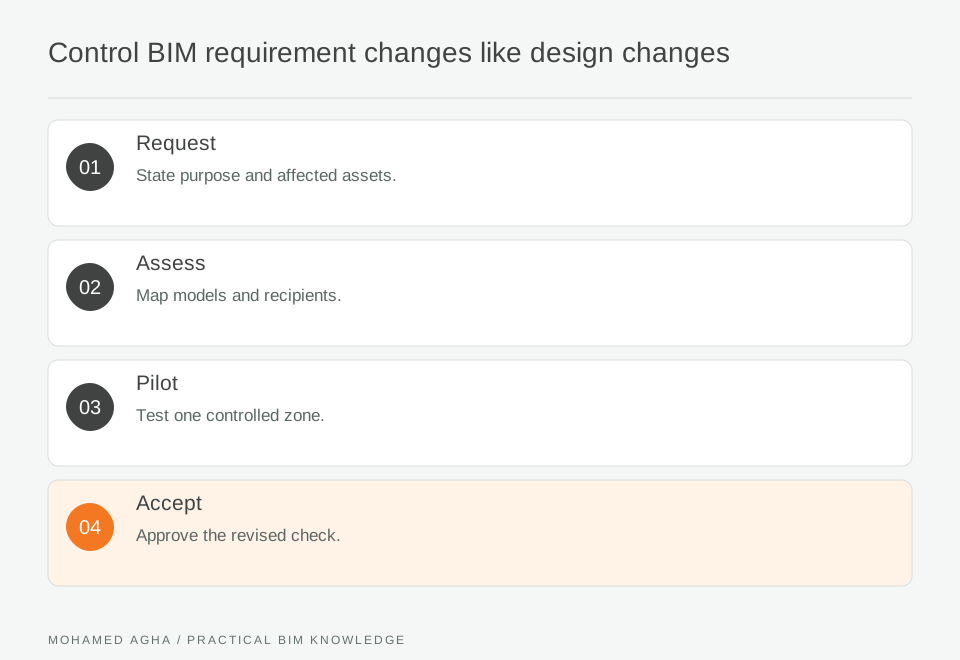
Read diagram notes
- Request
- State purpose and affected assets.
- Assess
- Map models and recipients.
- Pilot
- Test one controlled zone.
- Accept
- Approve the revised check.
Pilot a limited sample
Apply the revised requirement to one room, structure or system. Ask the intended recipient to retrieve and use the information. This reveals whether instructions, mappings and permissions really work.
Approve the definition
Record the owner who accepts the field meaning, not only the person who configures it. Make allowed blanks, unknown values and evidence links explicit so authors do not invent information to pass a check.
Retest at delivery
Run the agreed rule and inspect a small sample in the recipient environment. Keep the previous requirement and the change decision together, because a later reviewer must understand which version governed each issue.
Worked example: add a maintainable-asset field
During design development, the operator asks for a manufacturer-approved document reference on selected plant assets. The BIM manager maps the request to a defined asset class, identifies the document system as source, and pilots it in one plant room. The facilities reviewer can find a pump, its system parent and the approved manual; however, a spare field is not available from the supplier. That field is set to pending rather than populated with a guess, and the revised rule is accepted with the exception visible. Inputs are the owner request, an approved asset schedule and a sample IFC delivery. The pilot finds that the requested document value has two incompatible formats from suppliers. The information owner defines a controlled reference format and accepts a pending value for documents not yet approved. The output is a revised requirement, a mapping note and an exception list the recipient can review.
Change-control checklist
State the recipient use; define affected classes; name allowed values and source; assess issued outputs; pilot one zone; obtain owner acceptance; rerun the rule at the next delivery.