

A file delivery is only part of the workflow
AEC Magazine’s historical discussion of evolving BIM workflows emphasises the relationship between information exchange and project management. A practical application is to rehearse an exchange before a major issue. The method below is an independent hypothetical exercise for a structural package. It tests the receiving process as well as the files, without replacing the project’s formal information requirements or approval responsibilities.
Choose a representative slice
Select a small zone that includes the main object types and one known coordination interface. Include the model, associated schedule, relevant drawing and issue record where these form part of the actual deliverable. Do not select only the easiest objects. The rehearsal should expose realistic questions about scope and responsibility while remaining small enough that the team can inspect the result closely. Label it clearly as a rehearsal package.
State the receiving decision
Ask the receiver what they need to do with the information. A coordination reviewer, quantity surveyor and fabricator may need different fields and levels of detail. Write down the specific acceptance checks for the selected purpose. Identify the person or role authorised to accept the package. Avoid assuming that successful upload, successful opening and acceptance for a particular use are equivalent events. They are different points in the workflow.
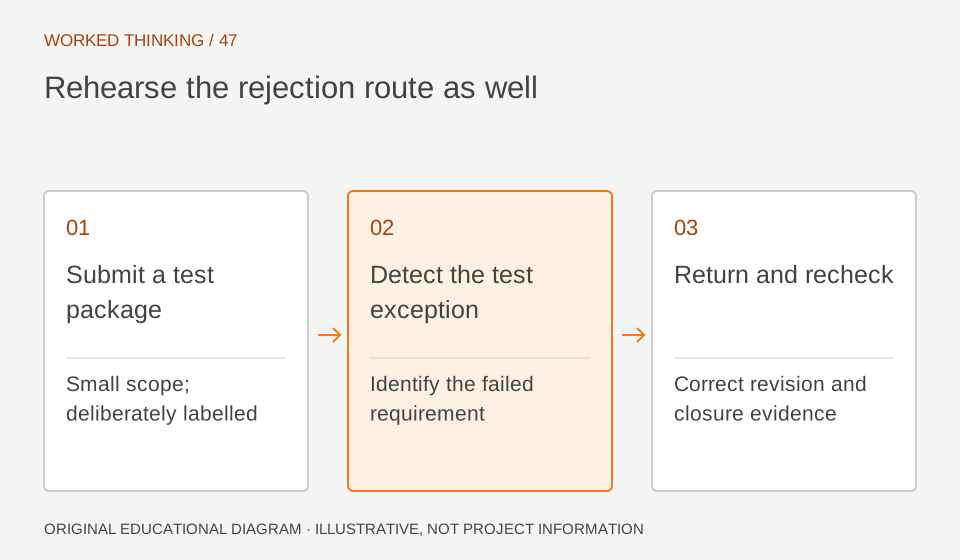
Read diagram notes
- Submit a test package
- Small scope; deliberately labelled
- Detect the test exception
- Identify the failed requirement
- Return and recheck
- Correct revision and closure evidence
Include an intentional, harmless failure
In the test copy, leave one required property blank or use an agreed invalid value. Tell participants that the package contains a test exception, but let the checking process locate it. Keep the original source safe and ensure the test cannot be mistaken for a live issue. Record whether the exception is detected, who receives it and how the author learns what needs correction. The rejection route deserves as much attention as the successful route.
Measure the handoffs
Record when the author submits, the receiver starts checking, the exception is returned and the corrected package is accepted. Note unclear ownership, inaccessible attachments and inconsistent terminology. The purpose is to identify friction, not to rank colleagues by speed. A delay caused by an undefined approval role will not be fixed by exporting the model faster. Update the workflow where the rehearsal reveals a missing decision or communication step.
Recheck the corrected package
Verify the correction against the same acceptance rule and confirm that the revised package can be distinguished from the rejected version. Check whether related schedules or drawings also need updating. Preserve the exception and closure evidence with the rehearsal record. If the correction affects information outside the selected slice, extend the review rather than assuming that a local edit has no wider consequences.
Turn the rehearsal into a repeatable gate
Publish a short exchange checklist, responsible roles, expected evidence and rejection route. Use the rehearsal findings to refine the actual delivery plan before the deadline. Repeat the exercise when the receiving use, export configuration or team responsibilities change materially. A well-run rehearsal converts assumptions about collaboration into observable steps that the team can repeat under delivery pressure.