
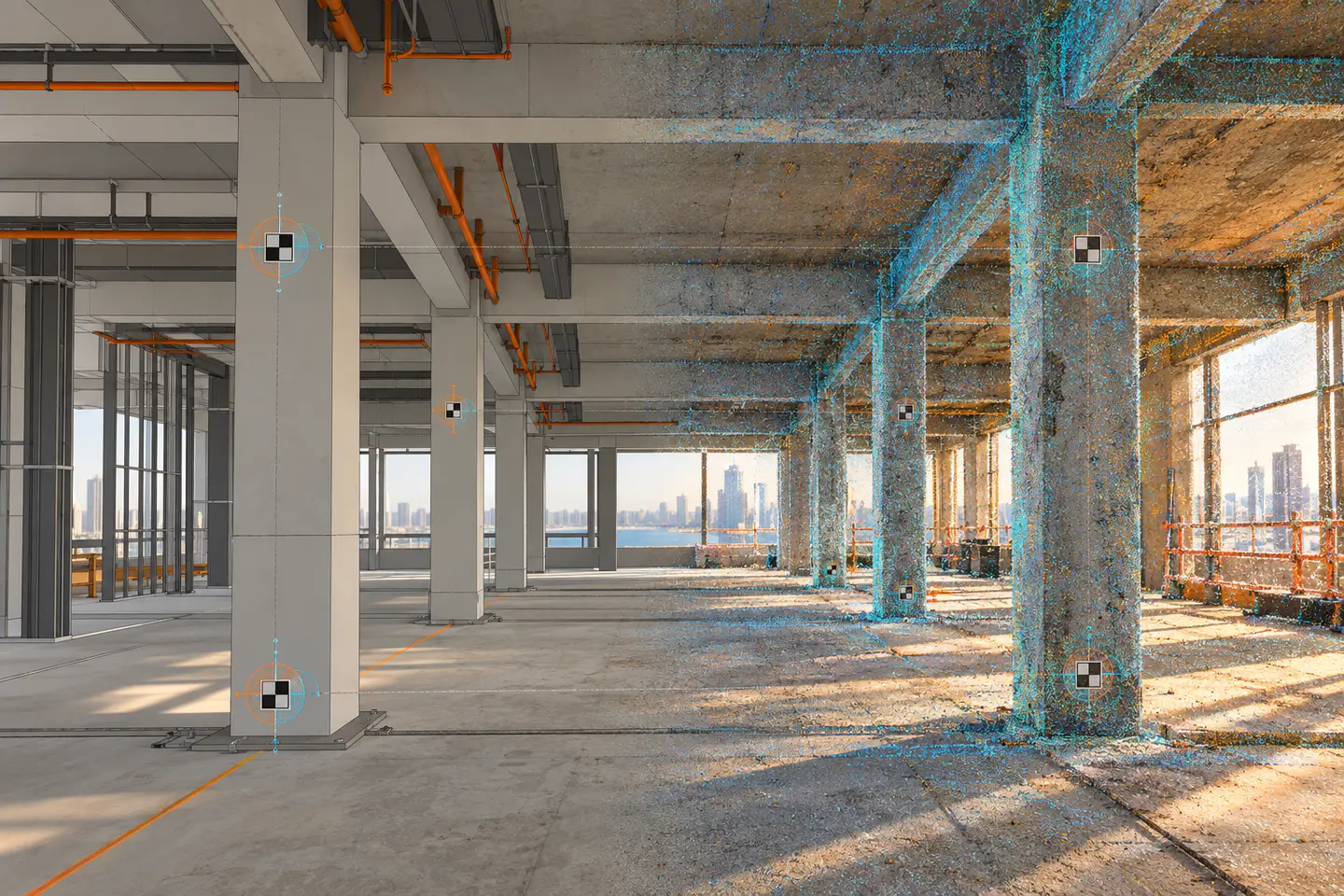
Define the comparison question
A model-to-capture review may test accessible geometry, placement of openings, recorded condition or construction progress. State one question before generating coloured deviations or an impressive overlay.
Verify alignment first
Check control basis, units, coordinate transform and scan registration before interpreting differences. A small rotation or vertical offset can create a convincing pattern of false deviations.
Choose observable samples
Select stable, accessible faces, openings, slab edges or columns and document why. Exclude clutter, reflective surfaces, temporary materials and hidden areas from the comparison evidence.
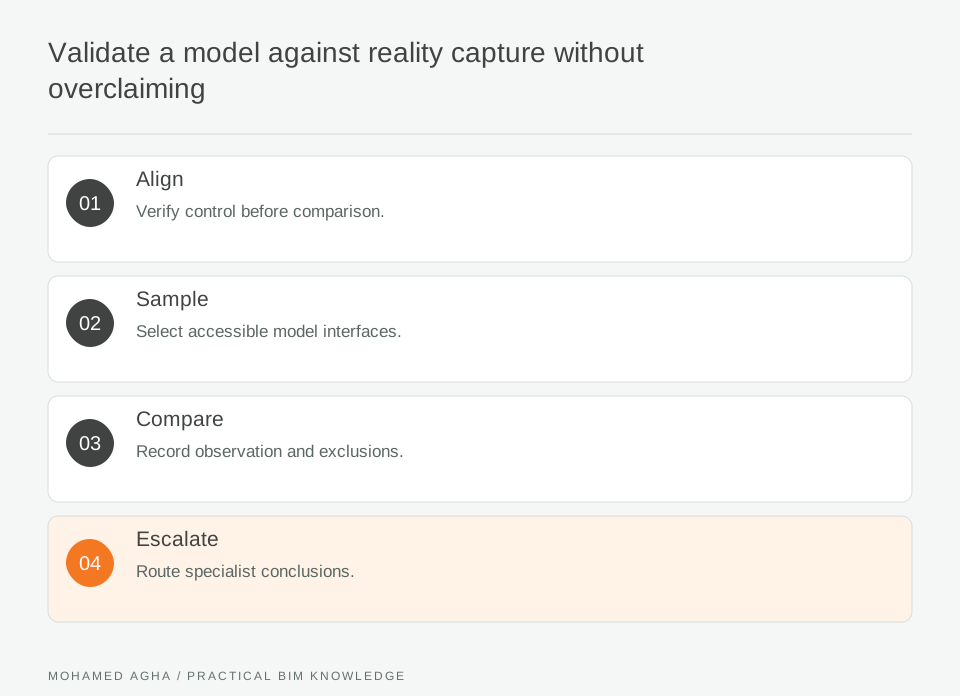
Read diagram notes
- Align
- Verify control before comparison.
- Sample
- Select accessible model interfaces.
- Compare
- Record observation and exclusions.
- Escalate
- Route specialist conclusions.
Read deviations in context
A visual difference may arise from modelling simplification, scan noise, alignment, surface finish or genuine change. Record the observation and route interpretation to the responsible engineer or surveyor.
Keep model and evidence distinct
Retain the point cloud or survey reference alongside the model view. Do not overwrite an issued design model with interpreted as-built geometry without controlled approval and a new status.
Publish limits with the result
The report should state coverage, source revision, comparison method, samples, exclusions and reviewers. It can support a decision, but it cannot establish hidden conditions, structural capacity or final acceptance on its own.
Worked example: validate an existing concrete frame
An existing-frame survey is compared with a coordination model around selected columns, soffits and door openings. The team first checks survey control and alignment, then excludes a scaffolded bay and reflective glazing from the sample. A deviation view highlights one opening that does not match the recorded frame. The finding is logged as an observation, not a capacity statement. The responsible structural engineer reviews whether it reflects an authoring assumption, a survey limitation or a change requiring further investigation. Inputs are registered survey data, model revision, controls and a selected comparison zone. The mismatch is an opening shown in the model where the cloud shows a solid frame face; the team confirms it is not a scan occlusion before escalating it. The output is a bounded observation record with evidence image, alignment basis, excluded areas and a named discipline owner for interpretation.
Validation checklist
State the comparison question; verify alignment first; choose observable samples; list exclusions; retain source cloud and model revision; route interpretation and approval to the responsible specialist.