

Begin with the estimate structure
A road model is not automatically a bill of quantities. Before extracting quantities, define the cost breakdown and the measurement rules that the estimate uses. A pavement layer may be measured by area or volume; a barrier by length; a bridge component by item or mass.
If the model object structure does not map to those units, create a documented mapping rather than relying on an export default. The quantity method should be reviewed by the estimator and relevant engineers.
Segment the model around delivery
For a hypothetical highway divided into four sections and one bridge, selections should align to the construction and procurement packages. Chainage, asset, layer, and work-front properties may help create repeatable groups. Avoid splitting every object into arbitrary model fragments just to make a chart.
Define how objects crossing section boundaries are allocated and whether quantities include laps, waste, temporary work, or excavation allowance. This makes reports explainable and prevents accidental duplication.
Map objects to measurable items
Create a controlled mapping from model classes and properties to estimate items. Verify that each object has the expected unit and quantity source. A topsoil layer modeled as a surface may produce area, while an excavation item may require volume between surfaces.
A bridge slab's model volume may not equal the pay quantity if contractual measurement rules differ. Keep the calculation formula visible and record the model revision used.
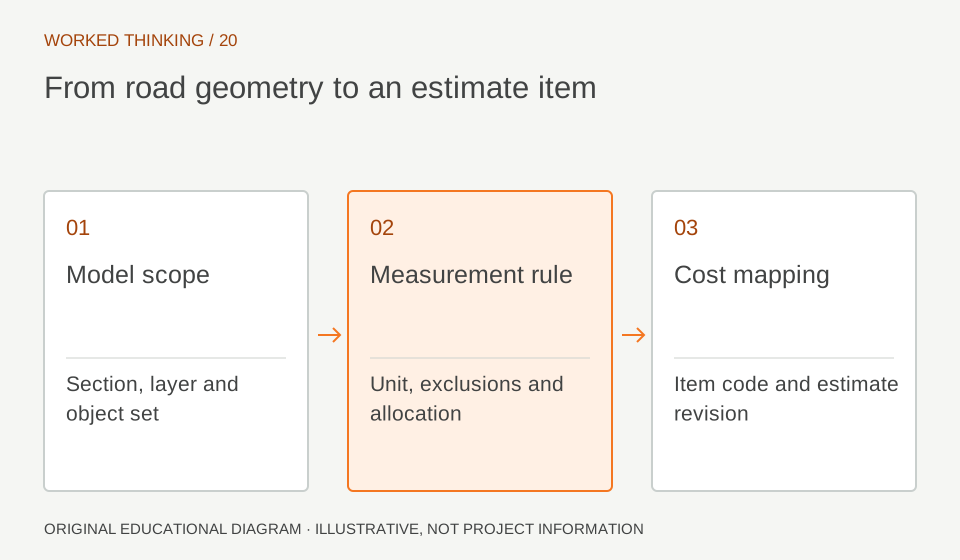
Read diagram notes
- Model scope
- Section, layer and object set
- Measurement rule
- Unit, exclusions and allocation
- Cost mapping
- Item code and estimate revision
Reconcile rather than trust totals
Compare extracted quantities against independent checks for representative sections and high-value items. Investigate unexplained differences before rolling numbers into the budget. Reconciliation can reveal gaps, wrong units, duplicated elements, hidden objects, or outdated model content. Establish tolerance bands for screening and identify who resolves each discrepancy.
A passing reconciliation of sample quantities does not validate every item, and it does not make the model the contractual source unless the contract says so.
Connect schedule activities with care
A 4D sequence requires a link between model selections and schedule activities. Map at a level that helps teams plan work fronts, closures, and resource interfaces. For example, roadway layers may be linked by section and sequence, while bridge erection needs more detailed activities.
Check dependencies and calendars in the schedule system; the visual model cannot make poor logic sound. Record which schedule revision is represented and how model changes affect the links.
Relate cost to scope and time
A 5D view may display cost by activity, work package, or model selection. Define whether values represent budget, commitment, forecast, or actual cost. Do not combine these states without labels.
In a hypothetical road package, a cost curve based on planned quantities should not be presented as earned progress until field measurement and commercial rules support that conclusion. Link cost codes to an approved estimate structure and preserve the derivation.
Track progress with field evidence
Model-based progress requires a method for confirming that work is complete. A colored object may indicate reported status, but the source could be a site inspection, survey, daily report, or contractor claim. Define the evidence and approval owner for each status.
For earthworks, a measured surface may provide useful progress evidence; for concealed reinforcement, inspection records may be needed. Keep the capture date and model baseline so later reviewers can understand what the visualization represents.
Keep the workflow auditable
Store the model, mapping table, quantity export, schedule, and cost report revisions that formed each submission. Record exclusions, manual adjustments, and approvals. When an object changes, identify whether quantity and schedule links need review. A simple reconciliation log can prevent repeated debates over why totals shifted between updates.
The model becomes a reliable planning aid when every number has a clear definition, source, and accountable reviewer. When quantities move between authoring and estimating tools, agree how rounding, unit conversion, and aggregation are handled. Compare totals at more than one level: an overall package total can conceal offsetting errors between sections.
Preserve both the source quantity and the mapped estimate value if conversion or adjustment occurs. These records make revisions explainable to commercial and technical reviewers without implying that model quantities override the project measurement rules.
Review exceptions with both estimator and discipline lead before publishing the revised cost report.