
Name the model purpose
A steel connection shown in BIM can mean different things: conceptual design intent, delegated connection design, or fabrication detailing. State which one applies before colleagues use its geometry. The title block, package register and model status must agree, particularly where procurement routes divide responsibilities.
Distinguish connection space from design
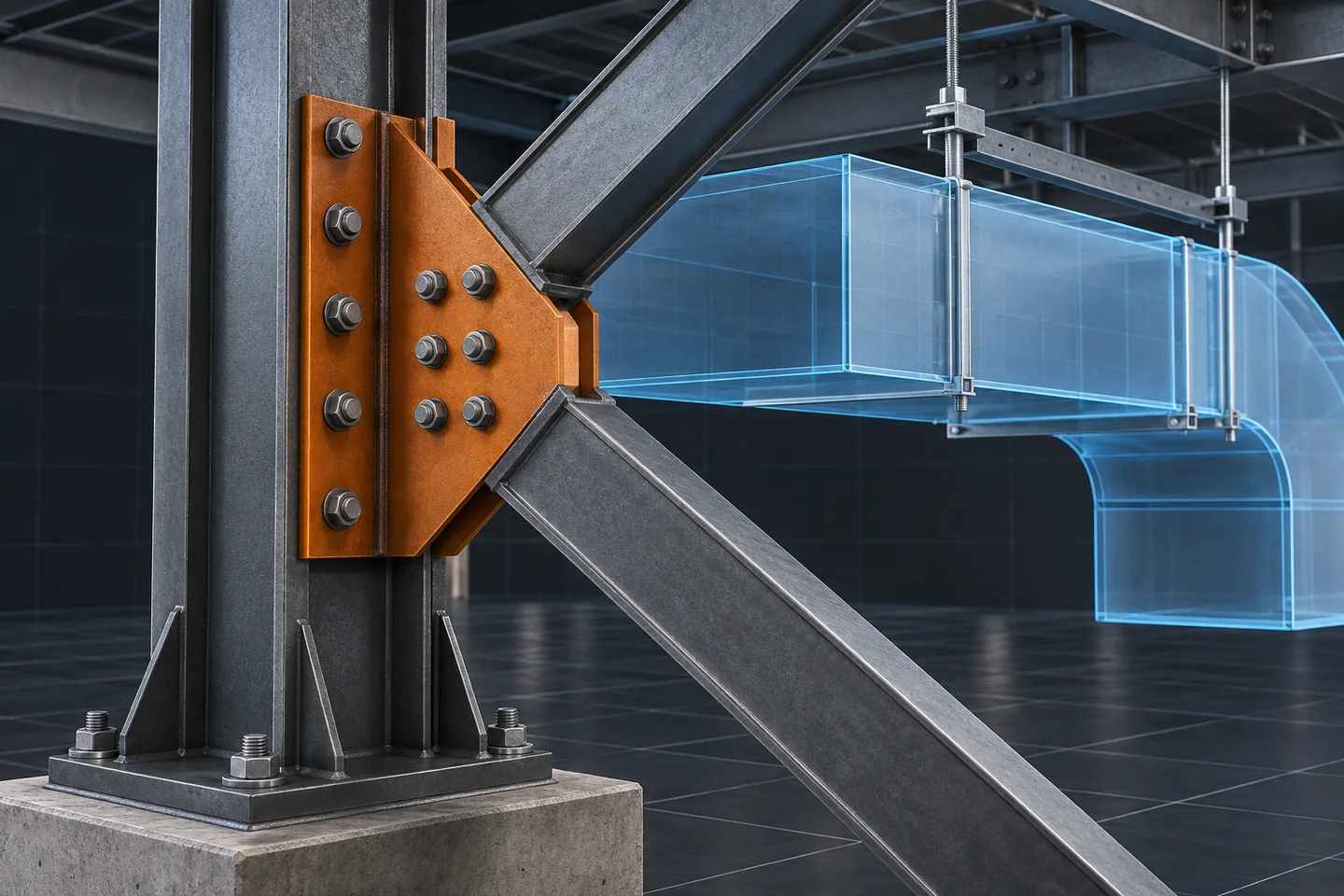
A gusset plate, bolts and stiffeners may be modelled accurately enough to test duct clearance while still awaiting connection design. The model is useful for spatial coordination; it does not transfer responsibility for strength, stability, bolt design or erection sequencing.
Locate the governed interface
Use a focused view with member marks, connection ID, level and nearby discipline objects. Include the interface boundary: beam ends, bracing line, slab edge, fire protection and access envelope. This lets teams discuss a real location rather than a generic connection family.
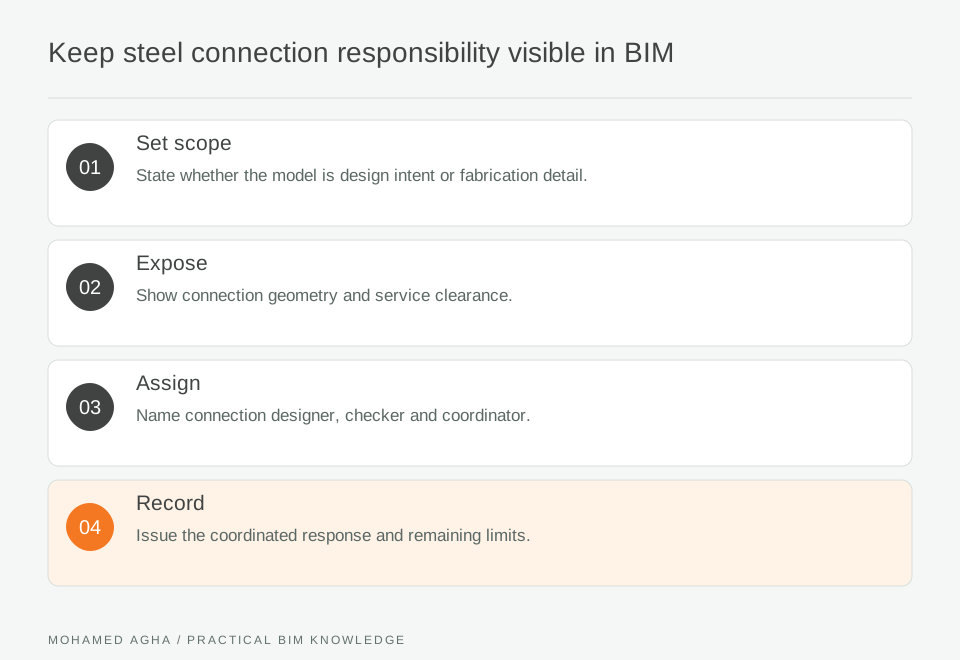
Read diagram notes
- Set scope
- State whether the model is design intent or fabrication detail.
- Expose
- Show connection geometry and service clearance.
- Assign
- Name connection designer, checker and coordinator.
- Record
- Issue the coordinated response and remaining limits.
Keep fabrication detail status visible
Fabrication-level components should carry a clear release state and revision. Never overwrite a previous accepted package with a later coordination experiment. If a shop model is used as coordination context, reference its controlled source and make unresolved interfaces visible.
Resolve a brace-and-duct interface
A diagonal brace connection and a supply duct may fit in a coarse model but conflict once the gusset plate and duct insulation are represented. First confirm which steel package supplied the plate and whether the connection geometry is provisional. Capture a section through the actual interface, not an arbitrary overall building view. Ask the services team to examine its routing envelope while the steelwork designer assesses any connection change. Record the chosen response against both object identities. After an updated package arrives, recheck the clearance using the same agreed inclusions, and confirm that the connection revision is reflected in the released coordination context. Keep an access question separate if a bolting or inspection task still needs space. Removing the visible clash alone does not answer every interface question.
Coordinate clearance without assigning capacity
Check whether the modeled volume conflicts with services, walls, finishes or access routes. Raise a question if it does. Do not modify plates or bolt patterns merely to remove a clash unless the accountable connection designer issues the revision.
Issue a responsibility record
A useful closure record names the steelwork designer, checker, fabricator where relevant, and coordination owner. It links the package version and response. It does not claim that an interference-free model proves fabrication tolerance, capacity or safe erection.