

Separate a request from an instruction
An opening request is not permission to change a member. In a plant-room transfer zone, begin with the service identifier, the required clear size, the proposed centreline and the requesting discipline. Record whether it is a sleeve, formed void, cast-in item or a later-drilled proposal. That vocabulary prevents a void drawn for coordination from being read as an approved penetration.
Identify the host before cutting
For each opening, capture the structural host ID, level, grid reference and the model revision that was reviewed. A hole near a beam support and a hole at midspan may look similar on plan while needing a different engineering response. The coordinator should identify the condition and preserve the request; the responsible structural engineer determines whether a change is acceptable.
Make builder’s-work status explicit
Use an opening register with a status that describes evidence: requested, information issued, engineer response received, or built confirmation pending. Avoid a single green “approved” colour with no owner. Tie the record to the controlled drawing, calculation or instruction that establishes the actual decision.
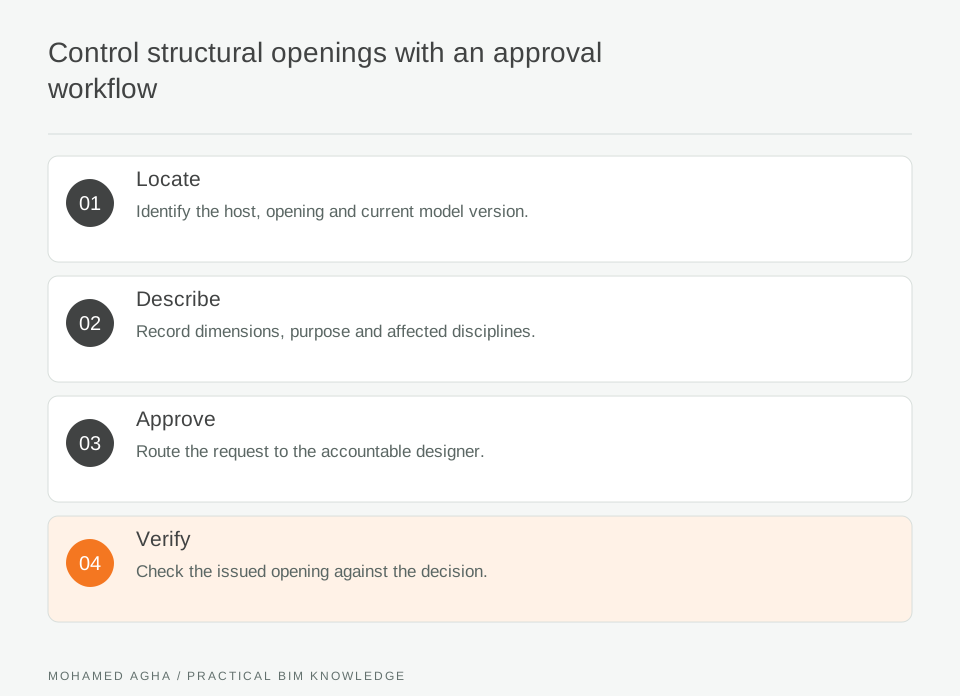
Read diagram notes
- Locate
- Identify the host, opening and current model version.
- Describe
- Record dimensions, purpose and affected disciplines.
- Approve
- Route the request to the accountable designer.
- Verify
- Check the issued opening against the decision.
Review the collision in section
A 3D view is useful for locating services, but a perpendicular section usually reveals the real interface: reinforcement zone, support, edge distance, elevation and access. Review the nominal and maximum service envelope separately. Do not infer reinforcement arrangements from an illustrative rebar model.
Work through one opening request
Consider a riser duct approaching a floor near a transfer beam. The services model shows the duct centreline, while the opening request uses its external envelope including insulation. That distinction changes the required coordination space. The reviewer creates a perpendicular section, identifies the slab and adjacent beam, and links the request to the relevant level and grid. The structural designer may accept, reject or request a changed location; none of those outcomes is inferred from the clash report. After a response, update the opening register and the appropriate model together. Check that the revised opening exists in the issued exchange and that the earlier proposal is no longer presented as current. The useful result is one request with a recoverable decision, not several disconnected voids.
Route approval to the right role
If the request affects a structural member, route it with its model location and purpose to the accountable design role. Coordination can package the question, check that every party sees the same location, and track the reply. It cannot substitute for the designer’s technical instruction or site change process.
Close with a traceable record
Accept the workflow when another reviewer can recover the host, request, decision source and latest status without a meeting. Keep rejected alternatives visible in the log where they explain why a service route changed. The record supports coordination; it does not certify drilling, temporary support or construction method.